BUILD KNOWLEDGE. GAIN CONFIDENCE. INVEST SMARTER.
Your guide to the world of bullion investing
Loading

Bullion Desk CLOSED
10 November 2025
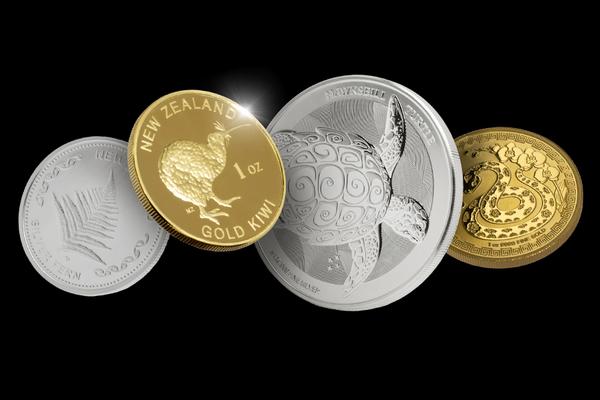
If you're considering precious metals for the first time, this guide explains the fundamentals: what makes gold and silver different from other investments, how they function in a portfolio, and what you need to know before making your first purchase.
6 November 2025
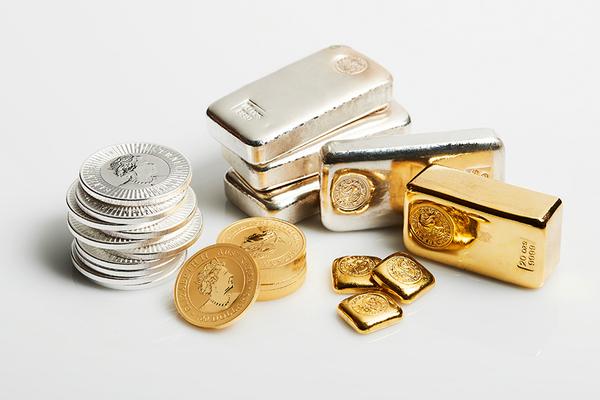
When investing in precious metals, one of your first decisions is choosing the format: bars, coins, or rounds. Each option has distinct characteristics, and understanding the differences helps you select products that align with your goals, budget, and storage preferences.
6 November 2025
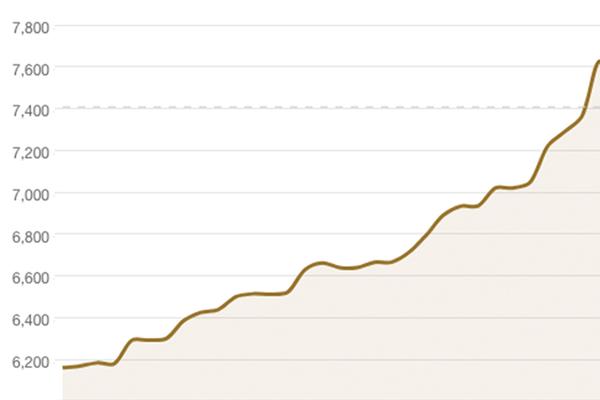
If you've browsed gold or silver products online, you've likely encountered the term "spot price." Understanding what this means — and why the retail price differs from it — is essential for making informed bullion purchases.
5 November 2025
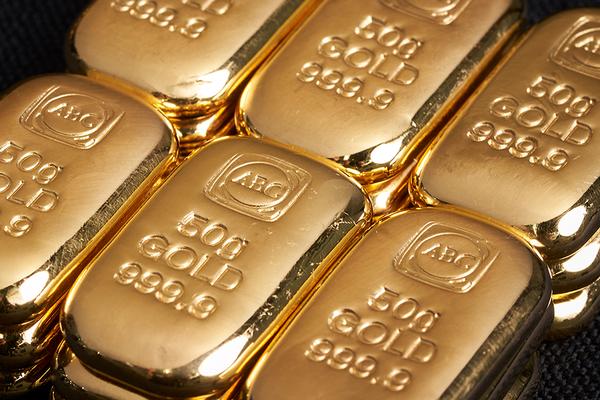
This guide explains precious metal purity standards, what certifications to look for, and how to ensure your investment meets recognized quality benchmarks.
Precious Metals in Focus: What Drove the Rally and What It Means for Investors
Quick note before we begin. If any terms feel unfamiliar, see the simple glossary at the end.
The past several months have been extraordinary for precious metals. Gold, silver and platinum all pushed to record or near-record levels through late 2025 and into January, before experiencing a sharp pullback that caught many investors’ attention.
To understand where we are today, it helps to look at what drove prices higher in the first place, why January marked a turning point and how long-term investment principles still matter through periods of volatility.
The Run-Up: What Drove Prices Higher
Silver provides the clearest example of how powerful the move became.
By the end of August 2025, silver was already up 39% year to date. It started September at USD 40.79 per ounce and went on to peak in January at USD 121.78 per ounce. That represents a 198% rally in just five months.
This move was driven by a combination of physical and financial factors.
On the physical side, large volumes of silver were shifted from London to New York earlier in the cycle as traders positioned ahead of potential US tariffs. By April, roughly 200 million ounces had been moved to New York, a 60% increase in stock. At the same time, refineries were under heavy strain as higher prices triggered a surge in scrap and jewellery selling, creating processing backlogs that limited the market’s ability to respond quickly with new refined supply.
Investment demand also strengthened as silver broke USD 35 per ounce for the first time since the post-2011 period. Silver exchange traded funds (investment products that track the price of silver and trade on stock exchanges) saw their largest inflows since 2021, with total holdings exceeding USD $40 billion by mid-2025.
By September, additional demand from India’s festival season added further pressure. Indian silver imports doubled in September compared with August, and in October reached USD 2.7 billion, dramatically higher than prior years. This combination of rising demand and limited availability pushed the market into visible tightness, with lease rates rising (the cost of borrowing physical silver) and silver trading in backwardation (where the current price is higher than prices for future delivery).
January: From Momentum to Extremes
By January, price action had become increasingly driven by financial markets.
Precious metals reached all-time highs, with gold trading as high as USD 5,594.80 per ounce, silver at USD 121.64 per ounce, and platinum at USD 2,918.80 per ounce. Silver was up as much as 70.7% during January at one point, and volatility surged. One-week at-the-money implied volatility (a measure of how much prices are expected to move in the near term) peaked at 50% for gold and 101.60% for silver, levels well above those seen during March 2020.
A big part of the price surge came from trading activity in derivatives markets (financial markets where contracts are based on the price of metals rather than owning the metal itself). As more investors bet on rising prices, the firms on the other side of those trades had to buy large amounts of physical metal to protect themselves. This extra buying pushed prices even higher.
The turning point came when the Chicago Mercantile Exchange raised margin requirements multiple times in quick succession. By early February, margin requirements (the upfront cash required to trade) had risen to 9% for gold and 18% for silver and platinum. As prices rose, the US dollar value of margin required more than doubled for gold contracts and almost tripled for silver contracts.
This triggered forced selling from leveraged traders (investors using borrowed money). On 30 January alone, gold fell 9.8% day-on-day, silver fell 27.1%, and platinum fell 17.7%. Over the past month as a whole, gold was still up 8.1%, while silver was down 8.8 %, with platinum down 18.2%.
Where The Market Stands Now
The sharp correction has washed out a large portion of speculative positioning. Trading volumes and volatility have fallen meaningfully and markets are beginning to search for balance.
At the same time, the underlying fundamentals for precious metals have not disappeared:
What has changed is sentiment. We’ve moved from exuberance to caution, a normal and healthy part of any market cycle.
What This Means for Investors
Periods like this highlight why a disciplined approach matters. Rather than trying to time short-term price swings, a steady, long-term approach is to focus on:
As Warren Buffett famously said, “Be fearful when others are greedy, and greedy when others are fearful.”
That perspective is less about acting impulsively and more about staying patient, measured and aligned with your investment strategy through market cycles, even when the headlines are loud.
Key Takeaways
Glossary
Exchange Traded Products
Investment products that trade on stock exchanges and are backed by assets such as gold or silver. They allow investors to gain exposure to precious metals without holding physical bullion.
Lease Rates
The cost of borrowing physical metal for a period of time. Rising lease rates often signal tight supply, as borrowers are willing to pay more to access metal.
Backwardation
A market condition where the current price of a metal is higher than the price for future delivery. This usually indicates strong immediate demand or shortages of physical supply.
Derivatives
Financial contracts whose value is based on the price of an underlying asset, such as gold or silver. They are commonly used to manage risk or take positions on future price movements, rather than to own the physical metal itself.
At-the-Money Implied Volatility
A measure of how much the market expects prices to move in the near term, based on options pricing (the cost of contracts that give the right to buy or sell a metal at a set price). Higher implied volatility means larger price swings are expected.
Margin Requirements
The amount of cash or collateral traders must deposit to hold futures positions (contracts to buy or sell a metal at a set price on a future date). When margin requirements increase, traders need more capital, which can force selling.
Leveraged Traders
Investors who borrow money to increase their exposure to price movements. Leverage can amplify gains, but it also magnifies losses, especially during sharp market moves.
Dollar-Cost Averaging
An investment approach where you invest a fixed amount of money at regular intervals (for example, weekly or monthly), regardless of price. This helps smooth out the impact of market ups and downs over time and reduces the risk of investing a large amount at the “wrong” moment.
Platinum: The Quiet Metal Making a Loud Move
When investors think of precious metals, two names dominate: gold (the timeless store of value) and silver (the people’s metal). But there’s a third player in this trio – one that often gets overlooked, traded quietly in the background, until suddenly it makes itself heard: platinum.
Over the past year, platinum has staged a remarkable rally. And yet, compared to the endless commentary on gold and silver, you’ll hardly find a whisper about it in mainstream financial news. So what’s driving this surge, and why should investors pay attention?
A Precious Metal with a Twist
Platinum is rarer than gold. In fact, all the platinum ever mined would fit inside an average living room. Gold, by comparison, would fill three Olympic-sized swimming pools. That scarcity makes platinum both precious and industrially valuable.
Unlike gold, which is prized mainly as a monetary and investment asset, platinum has widespread industrial demand. It’s used heavily in:
This dual identity, precious and industrial, is what makes platinum unique. It can rise as a safe-haven asset in uncertain times, while also riding the tailwinds of technological and industrial shifts.
A solid platinum nugget. Copyright: Harry Taylor/Getty Images
Why Platinum is Rallying
There are several forces at play behind the latest climb:
The Numbers Tell the Story
While gold and silver have impressed this year, platinum has quietly outperformed them both.
Year-to-date performance of major precious metals. Source: market data, as at 30 September, 2025.
If gold is the king of precious metals and silver is the people’s champion, then platinum might just be the quiet genius working behind the curtain: rare, versatile, and now, finally getting some overdue attention.
With supply tight, industrial demand rising, and prices playing catch-up, platinum deserves a place in the conversation, and perhaps in a well-diversified portfolio.
Disclaimer: This article is for informational purposes only and does not constitute financial advice. Investors should seek independent financial advice before making any investment decisions.
Gold Through the Ages: Why It Shines in Some Cultures – and Not Yet in Ours
From ancient Egypt to modern Wall Street, gold has always been more than a metal. Across civilizations, it has represented power, purity, and permanence.
Two themes endure across time:
Why Kiwis Lag Behind
In countries like India, the US, and Germany, these cultural traditions translated into strong investment habits. Families and institutions alike see gold as a natural part of wealth protection. In the US, gold ownership surged after the lifting of restrictions in the 1970s, embedding it as a hedge in investment portfolios. In Germany, shaped by the scars of hyperinflation in the 1920s and again post–World War II, gold is seen as a bulwark against currency debasement. Today, Germans are among the largest private holders of physical gold in the world.
New Zealand, by contrast, took a different path. Our “gold rush moment” in the 19th century created towns and infrastructure, but once the rush subsided, gold slipped from everyday life. Instead, property became our national store of wealth – a culturally ingrained preference that still dominates Kiwi portfolios.
We recently completed a comprehensive survey of investors in New Zealand, and the findings confirm this. While gold is seen as a premium, safe-haven asset, it still plays a limited role in New Zealand’s financial services sector. Financial advisers rarely recommend it, platforms don’t make it easy to integrate into portfolios, and investors often see it as niche or inaccessible. Bullion here retains a “secret society” feel – respected, but not yet mainstream.
Why This Matters Now
Globally, the picture is shifting. Inflation, geopolitical uncertainty, and the overprinting of fiat currencies are shining a new spotlight on bullion. Gold has been one of the strongest-performing assets of recent years, and demand is rising from both central banks and private investors.
For New Zealanders, this creates an opportunity to rediscover what other cultures have never forgotten: that gold is both a protector and a provider, with a role alongside property, shares, and cash in a diversified portfolio.
At New Zealand Mint, we believe education is the missing link. By demystifying bullion, making it easier to access, and showing its role in financial security, we can help build a new Kiwi tradition – one where gold is not just part of our past, but a vital part of protecting our future.
Debt, Deficits, and Debasement: Why Bullion Belongs in Your Portfolio
Money, in its many forms, has been a cornerstone of human progress.But it hasn’t always held its value.
Currency debasement – the process of reducing the value of money – is not a modern invention.In fact, it dates back thousands of years.Ancient rulers would clip or dilute precious metal coins with cheaper base metals like copper or tin to stretch their supply.The face value stayed the same, but the real value dropped.It was a hidden tax on the people.
Fast-forward to today, and whilst the mechanics have changed the core idea hasn’t. Modern governments no longer clip coins.They print money.And with the rise of fiat currencies – paper money not backed by a physical commodity – the potential for oversupply has grown exponentially.
What does this mean for today’s investors?
Let’s take the United States as an example.Since the 2008 Global Financial Crisis – and accelerating after COVID-19 – the U.S. government has massively expanded its money supply to stimulate the economy.The result?A national debt approaching $40 trillion, with interest payments now the fastest-growing component of the federal budget.
As the U.S. money supply has surged over the decades – especially after key events like the end of the gold standard, the Global Financial Crisis, and COVID-19 stimulus – gold has kept pace, reinforcing its role as a store of value in an era of expanding fiat currency.
In many ways, we’ve entered an era of financial alchemy, creating new dollars with keystrokes.But while the supply of dollars is growing, the supply of trust is shrinking. Inflation may have cooled from its post-COVID highs, but the underlying pressure of too much debt and too much money hasn’t gone away.
This is where bullion comes in.
Gold and silver – once the basis of money itself – have come full circle.No longer currency in daily use, they now serve a different role: as a store of value that stands outside the system.In a world where paper money can be printed at will, bullion remains finite, tangible, and independent.
As Ray Dalio, an American billionaire and one of the most influential hedge fund managers of our time (founder of Bridgewater Associates), recently put it:
“I believe that those who don’t have 10 to 15 percent of their assets in gold or something like it (e.g., Bitcoin) are making a big mistake.”
He went on to add:
“In my own portfolio, I hold gold and a small amount of Bitcoin. I strongly prefer gold to Bitcoin – but that’s up to the individual. The real issue is the devaluation of money.””
Dalio pointed out that gold has already become the world’s second-largest reserve currency, surpassing the euro earlier this year.He sees gold as a strategic diversifier – a hedge against systemic risk and long-term debasement.
Dalio’s comments are part of a broader trend: more investors, institutions, and even central banks are allocating to gold as protection against currency decline and sovereign debt stress.
It’s not about panic. It’s about prudence.
Gold and silver don’t pay interest.They don’t multiply like equities in a bull market.But they aren’t supposed to.Their job is different.In an environment where fiat currencies are under pressure – whether from inflation, debt, or geopolitical strain – bullion provides steadying weight.
And there’s a certain irony here: the very materials once clipped from coins to debase them – precious metals – are now the tools investors use to protect against the debasement of today’s currencies.
The long arc of monetary history shows that trust in currency is not fixed.It must be earned and can be lost.As paper currencies face growing strain, the role of gold and silver as steady, trusted stores of value is becoming more important.
Disclaimer: This article is for informational purposes only and does not constitute financial advice. Investors should seek independent financial advice before making any investment decisions.
Why Gold Still Shines in a Digital World
Gold and Bitcoin have both been making headlines in 2025, with prices reaching record highs and mainstream interest growing. As economic uncertainty continues to drive demand for alternative stores of value, more investors are weighing up these two very different assets.One is steeped in centuries of tradition; the other is a product of the digital age.Both are limited in supply, sit outside the banking system, and claim a place in the modern diversified portfolio.
But how similar are they, really?And what role should each play in a world where certainty feels harder to come by?
Gold has been trusted for thousands of years.From ancient coins to modern central bank reserves, it has long served as a store of value, a symbol of wealth, and a safe haven in times of uncertainty.More recently, a digital contender has entered the spotlight – Bitcoin.Often referred to as "digital gold," it has captured attention for many of the same reasons: it is limited in supply, outside of the traditional financial system, and seen by some as a hedge against inflation or currency risk.
But for many bullion investors, the comparison only goes so far.Yes, both gold and Bitcoin are relatively scarce.Both have passionate believers.And both sit outside the mainstream of shares and bonds.But when you dig a little deeper, the differences become just as important as the similarities.
Gold is physical.You can hold it in your hand, store it securely, and trade it with confidence.Its value is tied not just to belief, but to thousands of years of history and global recognition.Bitcoin, by contrast, is entirely digital.It doesn’t exist in any physical form, and owning it depends on technology – from internet access to passwords and platforms.For some, that’s the appeal. For others, it’s a red flag.
Volatility is another big difference.Gold can fluctuate in price, of course, but generally moves in a relatively stable range over time.Bitcoin’s price swings are far more extreme – soaring and crashing in cycles that can feel more like speculation than investment. That makes it exciting, but also unpredictable.
Another key point is how each asset is used.Gold demand is broad and diverse: jewellery, investment, and industrial uses all play a part.Bitcoin, on the other hand, is almost entirely driven by investor sentiment.That makes it more sensitive to headlines, regulation, and market hype.
None of this is to say that Bitcoin has no future.In fact, it’s already becoming more accepted in financial circles, with new ways to invest in it and more discussion about its long-term role.It may yet become a permanent part of the global financial landscape.
But for investors who value certainty, gold still stands apart.It has weathered centuries of change, through wars, depressions, and revolutions.It doesn’t rely on electricity or code.And it’s universally understood – across cultures, across generations, and across economic systems.
A century-long snapshot of gold prices, with Bitcoin added from 2009 onward.The contrast highlights how young, and volatile, the digital asset still is beside gold’s long arc.
This chart uses a logarithmic scale to show percentage changes more clearly, so both gold and Bitcoin trends are visible despite their very different price levels.
In that sense, gold doesn’t need to be rebranded.It doesn’t need a tech upgrade. Its value is self-evident.Bitcoin may offer digital potential – but gold offers something rarer in today’s world: timeless trust.
Disclaimer: This article is for informational purposes only and does not constitute financial advice. Investors should seek independent financial advice before making any investment decisions.