October was another difficult month for precious metals, but the story became more complicated as the month progressed.
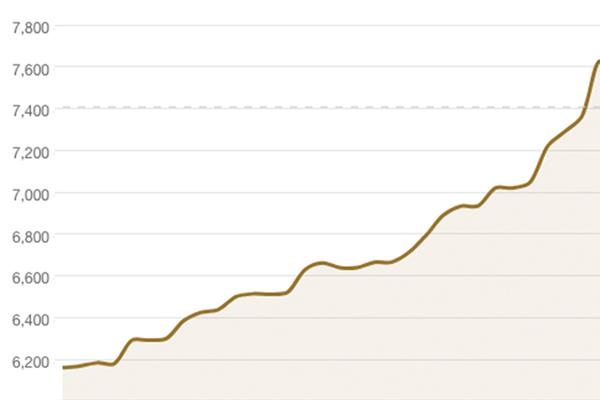
Gold ended October around US$3,881/oz, approximately 7% lower for the month, while silver fell much more sharply to around US$49/oz, a decline of approximately 19%. Gold dropped below US$4,000 for the first time in more than a year, while silver fell below US$50 for the first time in 11 months. Both metals recorded their second consecutive monthly decline.
For much of October, the same forces that weighed on precious metals in September remained in place: high bond yields, a strong US dollar, elevated oil prices and expectations that interest rates could stay higher for longer. Then, late in the month, a sharp selloff in technology shares created a broader rush for cash, pulling gold and silver lower alongside other assets.
The result was a useful reminder that gold does not always rise when financial markets become unsettled. Sometimes, particularly during periods of acute market stress, investors sell what they can rather than what they necessarily want to sell.
Short on time?
- Gold fell approximately 7% in October, ending the month around US$3,881/oz and briefly reaching its lowest level since October 2025.
- Silver fell approximately 19%, ending around US$49/oz after breaking below US$50 late in the month.
- The Federal Reserve left its target interest-rate range unchanged at 3.75% to 4.00%, although two policymakers preferred another 0.25 percentage-point increase.
- Higher bond yields, a strong US dollar and elevated energy prices remained important headwinds throughout the month.
- A sharp late-October selloff in technology shares created a broader liquidity squeeze, leading some investors to sell gold and other liquid assets to raise cash or meet margin requirements.
- Silver again moved more aggressively than gold, reflecting both its higher volatility and greater exposure to industrial demand.
- Despite the price weakness, central-bank gold buying remains above pre-2022 levels, while physical demand in markets such as India and China continues to provide an underlying source of demand.
- October therefore looked less like a simple change in the longer-term bullion story and more like several short-term pressures arriving at the same time.
Precious metals performance at a glance
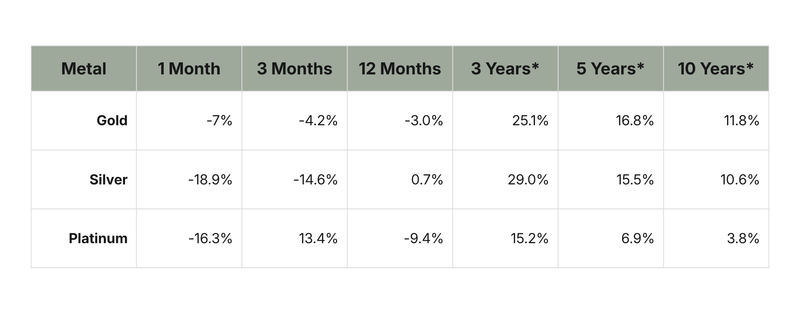
Silver's much larger decline also pushed the gold ratio to around 79, up significantly from approximately 69 at the end of September. In simple terms, it took around 79 ounces of silver to equal the value of one ounce of gold by month-end.
Important: Returns shown are approximate and based on historical spot price data available as at 31 October 2026. Past performance is not a reliable indicator of future performance. This information is provided for general information only and does not constitute financial advice or a recommendation to buy, sell or hold any investment product. *Returns are annualised.
What drove October?
Interest rates remained a major headwind
The interest-rate story that dominated September carried directly into October.
The Federal Reserve left its target range unchanged at 3.75% to 4.00% at its October meeting, but the decision was not unanimous. Two policymakers preferred another 0.25 percentage-point increase, while the Fed continued to describe inflation as elevated.
By the end of the month, markets were assigning roughly an 80% probability to another increase in December. Higher rates matter for precious metals because they increase the potential returns available from cash and bonds, raising the opportunity cost of holding assets such as gold and silver that do not generate income.
Longer-term bond yields also remained elevated. This continued to weigh particularly heavily on gold, which has shown a strong negative relationship with both real US bond yields and the US dollar in recent months. Research points to a sharp tightening in US monetary conditions since the Federal Reserve's Jackson Hole meeting, including higher real yields and a stronger dollar.

The US dollar remained strong
A stronger US dollar added another layer of pressure. Because gold and silver are predominantly priced internationally in US dollars, a stronger dollar reduces the purchasing power of buyers using other currencies. This does not mean the relationship always moves perfectly in opposite directions, but the combination of higher US interest rates and a strong dollar can be particularly challenging for precious metals. October provided another example of that dynamic.
The situation was also being reinforced by high global energy prices. Because much of the world's oil is priced and settled in US dollars, countries importing more expensive energy require more dollars to pay for it, creating additional demand for the currency. At the same time, higher oil prices can increase inflation, which in turn increases the risk of further interest-rate rises.
Then came the liquidity squeeze
The most interesting development arrived right at the end of the month. Technology shares sold off sharply as investors questioned the scale of spending on artificial intelligence infrastructure and whether that investment will ultimately generate sufficient returns. The Nasdaq recorded its biggest daily decline since June, while several high-profile technology stocks suffered substantial falls.
Normally, greater uncertainty might be expected to benefit gold. This time, the opposite happened. When financial markets fall quickly, some investors need to raise cash, reduce borrowing or meet margin requirements. That often means selling assets that are liquid and can be converted into cash quickly, and gold is one of those assets. Gold fell around 3.5% on 30 October alone, while silver dropped approximately 6.5%. Analysts pointed to forced selling and margin calls as contributors to the decline.
We have seen similar behaviour during previous periods of financial stress. Gold and silver can initially fall alongside shares as investors scramble for liquidity, even though the underlying source of that market stress might normally be expected to increase interest in defensive assets.
That distinction is important. A falling gold price during a market selloff does not necessarily mean investors suddenly view gold as more risky. Sometimes it simply means they need cash.

Oil continues to create opposing forces
The Middle East remained an important part of the picture throughout October.
Brent crude finished the month above US$117 per barrel after renewed disruption around the Strait of Hormuz. Higher energy prices add to inflationary pressure and strengthen the argument for keeping interest rates elevated.
This is the same unusual tension we have discussed over recent months. Geopolitical uncertainty can increase interest in gold as a defensive asset, but when that same uncertainty sends oil prices sharply higher, it can also push inflation, bond yields and interest-rate expectations higher. Those forces can work against gold.
During October, the interest-rate and liquidity effects generally proved stronger.
Silver faced an additional challenge
Silver's decline was considerably larger than gold's. Part of that simply reflects silver's historical tendency to be more volatile, but the industrial side of the silver market has also become increasingly important.
Silver is widely used in electronics, solar panels, vehicles and other industrial applications. That means concerns about economic growth and technology investment can weigh on silver at the same time that higher interest rates are affecting it as a precious metal.
There are also signs of softer demand in some important industries. Analysts surveyed by Reuters highlighted weaker photovoltaic demand, greater substitution by manufacturers and more cautious investment sentiment following this year's extreme price movements.
This is worth keeping in perspective. Silver remains an important industrial metal with a broad range of applications, but its supply and demand story is more nuanced than simply saying industrial demand must continue rising.
That helps explain why silver has underperformed gold so significantly during the recent correction.

Not all investment demand disappeared
One interesting feature of the past few months has been the difference between different types of gold investors.
Professional trading activity weakened as monetary conditions tightened, but longer-term investors did not all respond in the same way. Gold-backed ETFs continued to attract investment even while prices were falling, with global gold ETF holdings increasing by 67 tonnes during September to a record 4,256 tonnes.
The research supplied also points to comparatively weak trading volumes in gold futures during early October at the same time as ETF investors continued to accumulate gold.
That does not tell us where prices go next, but it does illustrate something important: the gold market is made up of many different participants with different time horizons.
A professional trader responding to movements in bond yields or the US dollar may behave very differently from a central bank, an ETF investor or someone buying physical bullion as part of a longer-term allocation.
So, where does that leave us?
October clearly weakened the short-term picture for precious metals.
Gold ended the month below US$4,000 for the first time in more than a year, around 30% below its January record. Silver's decline has been even larger, falling almost 60% from its January peak and pushing the gold ratio back towards levels not seen for nearly a year.
Interest rates remain central to the outlook. Inflation is still above the Fed's preferred level, energy prices remain high, and markets continue to expect another interest-rate increase before year-end. At the same time, the late-month technology selloff introduced a different risk, that tighter financial conditions themselves begin to place greater pressure on economic growth and other asset markets.
That creates a difficult balancing act for central banks. Keeping rates high for too long risks putting additional strain on indebted households, businesses, governments and financial markets, while easing too quickly risks allowing inflation to become more persistent.

The longer-term themes remain
October's selloff has not removed the broader themes influencing gold. Central banks continue to view gold as an important reserve asset amid concerns about geopolitical fragmentation, government debt and diversification. Central-bank purchases are expected to slow from the exceptional levels of recent years, but remain materially above the levels seen before 2022.
There is also an important distinction between today's high interest rates and the longer-term fiscal challenges facing many governments. High yields can make gold less attractive in the short term, but they also make servicing large government debt burdens more expensive. This tension between controlling inflation and managing increasingly expensive debt is unlikely to disappear quickly.
None of this means gold or silver prices must rise, or that October's lows will prove to be a bottom. It simply explains why the longer-term demand picture can remain relatively resilient even while shorter-term financial conditions are putting significant downward pressure on prices.
What this means for investors
Perhaps the clearest lesson from October is that there is no single rule for how precious metals behave.
Higher geopolitical risk does not always mean higher gold prices. Falling sharemarkets do not always mean investors immediately move into gold. Higher inflation can sometimes support interest in hard assets, but if it also leads to higher interest rates, it can work in the opposite direction.
The reason behind a market move matters. October combined high interest rates, elevated bond yields, a strong dollar, expensive energy and, finally, a sharp liquidity shock across financial markets. Gold and silver were caught in the middle.
For physical bullion holders, it is another reminder to separate short-term price movements from the reasons precious metals are held in the first place. Those reasons can include diversification, scarcity, the absence of counterparty risk and exposure to assets outside traditional financial markets, while the market price can still move significantly in either direction over relatively short periods.
As we move into the final two months of 2026, US interest rates, inflation, oil prices and broader financial-market conditions remain the key factors shaping precious metals markets.

Glossary
Liquidity squeeze
A period when investors and businesses urgently seek cash. This can lead to selling across many markets, including assets that might otherwise be considered defensive.
Margin call
A requirement for an investor using borrowed money to add cash or collateral after the value of their investments falls. Meeting a margin call can require selling other assets.
Real interest rate
An interest rate adjusted for inflation. Higher real rates generally increase the relative appeal of interest-bearing assets compared with gold.
Gold ratio
The number of ounces of silver required to equal the value of one ounce of gold. A rising ratio means gold is outperforming silver.
ETF
An exchange-traded fund. Gold-backed ETFs generally hold physical gold and allow investors to gain exposure to gold through financial markets.
Oversold
A technical-market term used when an asset has fallen rapidly and trading indicators suggest selling has become particularly intense. It does not necessarily mean the price will immediately recover.
Disclaimer: This article is for informational purposes only and does not constitute financial advice. Investors should seek independent financial advice before making any investment decisions. Past performance is not a reliable indicator of future performance.